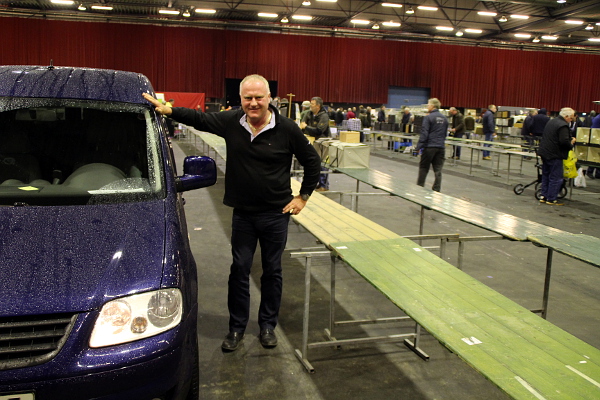
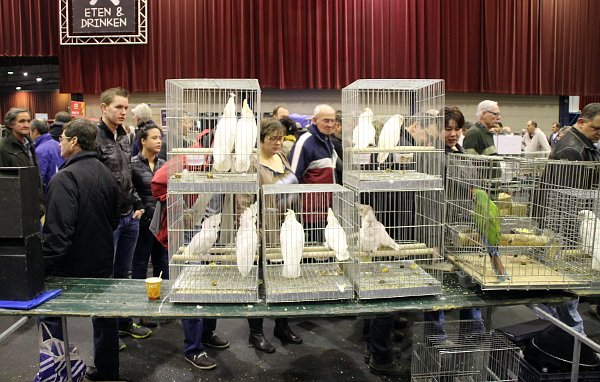
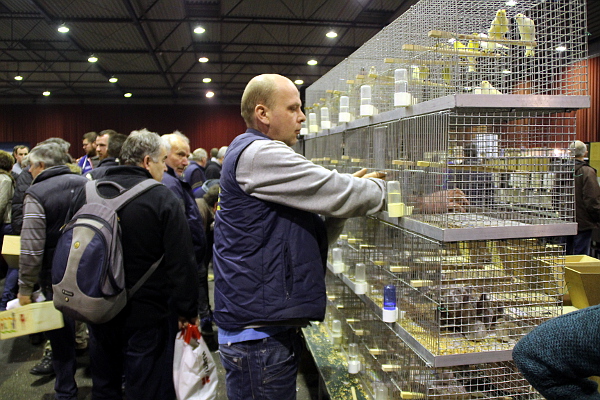
Twice a year European aviculturists are going to visit the greatest bird market Zwolle. Usually, you find there more birds in September as breeders sell their offsprings which were hatched in spring or summer. Less birds are present in February when we visited this market as well. Hundreds of sellers, thousands and thousands of visitors and infinite number of birds, bird foods, nestboxes, bird breeding supplies and literature. Every aviculturist has to be astonished when see two huge halls full of parrots in Zwolle.
a
(c) Jan Potucek
a
Within the last year avian flu appeared in Netherlands. The disease was intoduced there probably by migrating bird from the Far East. However, it hasn’t spread so all worries about organizing the market were useless. At 6:30 the market is opened for seller who have 2 hours to bring their goods and birds. They were obliged to show the birds in boxes of certain dimension. Otherwise, they wouldn’t be allowed to let them on the table. There was no possibility to sell birds on parking in front of the hall.
Selling places has to be reserved in advance on the internet. In this year you had only one entry on 2-3m of selling place on the table, two entries on 4-5m, three entries on 6-7m. So when 3 sellers go to Zwolle in one car and rent only 4m then one of them has to wait the line outside for public opening hours and pay 7 euro for the ticket. It’s not any big money. However, more annoying is length of the line and the fact that visitors got into the birdmarket two hours later when most of interesting birds are already sold.
a

(c) Jan Potucek
a
Whole bird market is organized very well. Sellers can drive into the hall and move among the tables. That’s why we didn’t have to carry heavy transport boxes and birds were not stressed outside in the cold. Shuttle service allowed to get all the birds to the hall within two hours. At a moment, only few cars could drive inside and leave it as soon as possible. The first sellers have a great possibility to see all the birds in an empty hall without any crush.
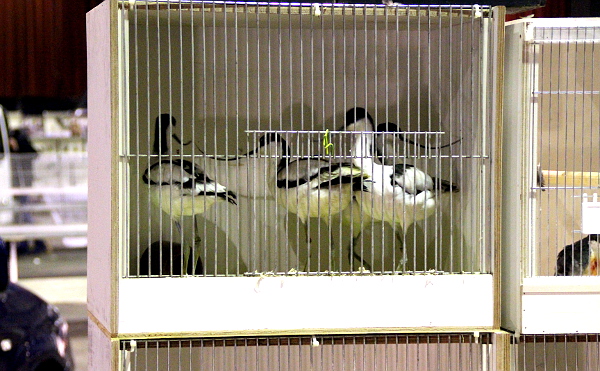
Recently, strict rules for sellers were set there. All birds have to be showed in cages of certain dimensions which fit to the species. And in every cage a feeder with seeds and water was necessary. We found out that this wasn’t any empty talk soon. Before the hall was opened for the public, vet inspector in orange jacket came at our place and asked us to put some food into our cages. However, it was clearly obvious that stressed birds won’t eat anything. We decided to put apples into the boxes which apparently satisfied the man who consequently left to control other breeders.
a
(c) Jan Potucek
a
Vet inspectors were not the only ones who control the birds. Besides them special police also checked the documents in CITES I species and european native species. However, we didn’t witness any case of confiscation. Representatives from authorities related to nature conservation helped the police.
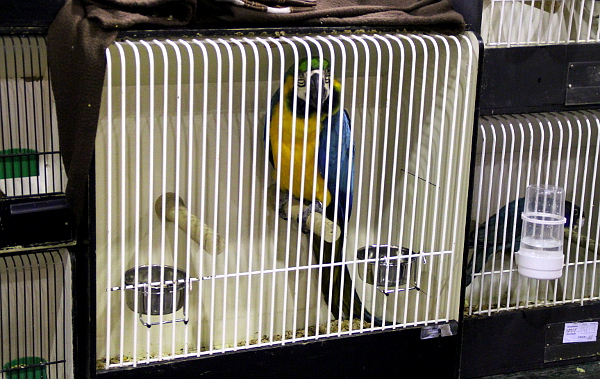
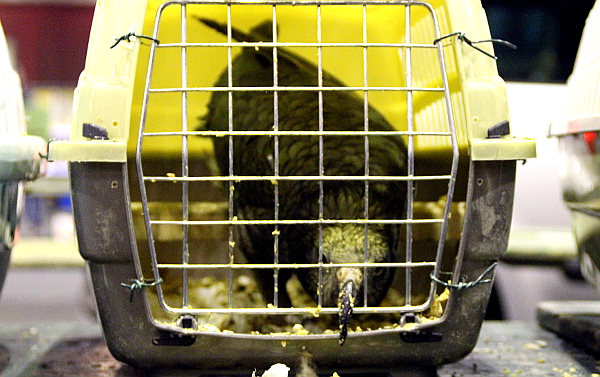
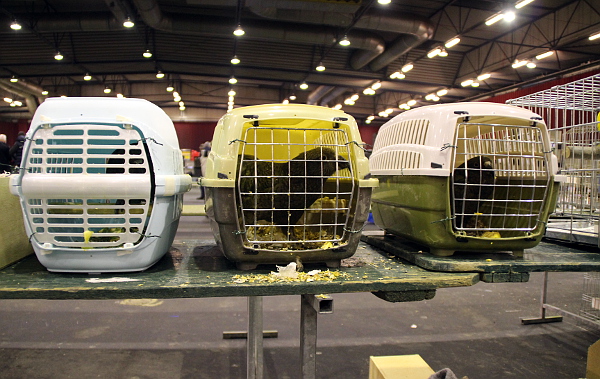
On the other hand, we were surprised by tolerance of organizers to selling birds from transport boxes. Otherwise, we couldn’t find three Keas stuffed in a transport box for cats. We also saw the Blue and Gold Macaw in a small show cage intended for parrots in size of Amazona Parrots or African Greys. However, it was just exception. Most of birds have been selling in boxes or cages of appropriate size which were clean.
a
(c) Jan Potucek
a

(c) Jan Potucek
a
(c) Jan Potucek
a
(c) Jan Potucek
a
(c) Jan Potucek
a
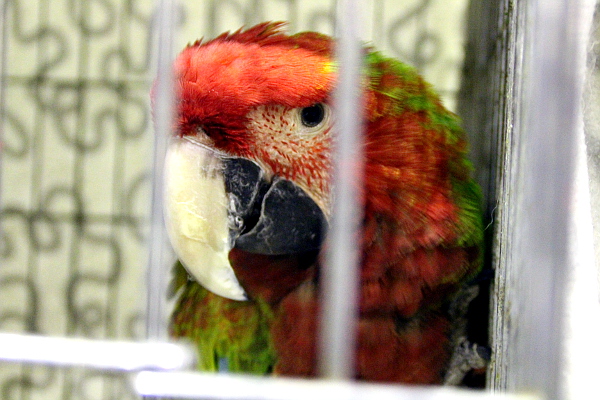
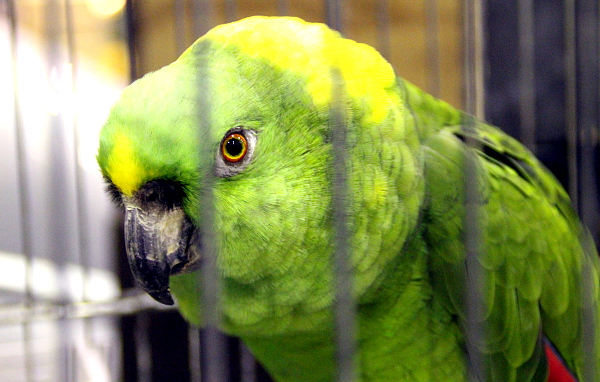
Kea wasn’t the only interesting species which we could see in Zwolle bird market. We saw also three Military Macaws in here for 1000-1200 euro each. Several hybrids were offered as well, for example one of Green-winged Macaw and probably Military Macaw. It probably got attention as its cage was empty eventually. The most common macaw species in Zwolle bird market was the Blue-winged Macaw but Red-shouldered Macaw and Blue-headed Macaw were present as well. Amazon parrots were offerred more frequently. We saw the Double Yellow-headed Amazon, Yellow-naped Amazon, Yellow-faced Amazon (one bird had completely skinny head but it’s quite common in this species), White Fronted Amazon, Red-lored Amazon, Blue-fronted Amazon, Mealy Amazon and others.
a

(c) Jan Potucek
a
(c) Jan Potucek
a
(c) Jan Potucek
a

(c) Jan Potucek
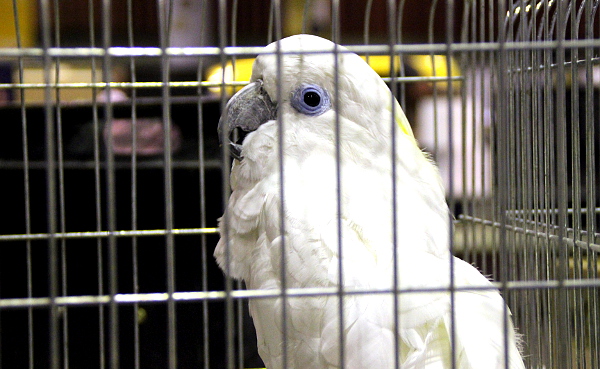
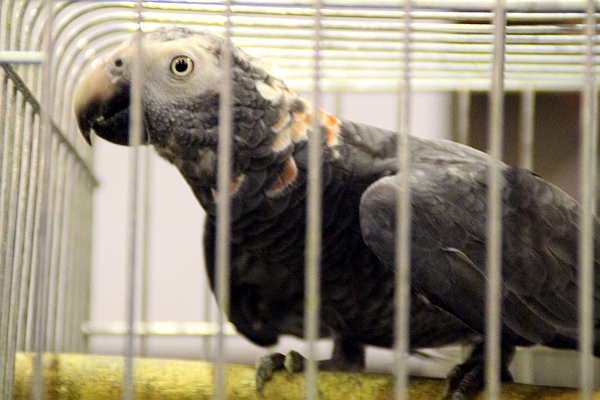
The offer of cockatoos was interesting as well. You could buy there such interesting species like the Blue-eyed Cockatoo or Long-billed Corella. We saw also the Little Corella, Goffin’s Cockatoo, Solomons Cockatoo, Inka Cockatoo, Galah Cockatoo (in mutation lutino as well), Yellow-crested Cockatoo, Sulphur-crested Cockatoo and Salmon-crested Cockatoo. However, all birds were not in good condition. The last species was heavily plucked in the breast. Sometimes differences in quality among offered birds were enormous. As for african parrots, we saw both species of African Grey Parrot. One seller offered a Timneh African Grey which had a few pink feathers. However, this was more because of poor diet than mutation.
a
(c) Jan Potucek
a

(c) Jan Potucek
a

(c) Jan Potucek
a
(c) Jan Potucek
a

(c) Jan Potucek
a

(c) Jan Potucek
a
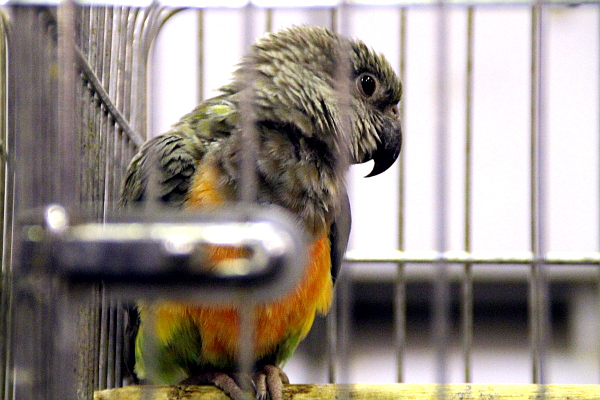
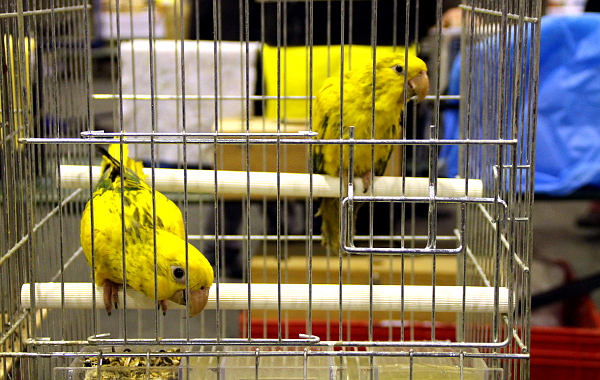
There were several Poicephalus species present in Zwolle – Senegal Parrot, Meyer’s Parrot, Red-bellied Parrot and Jardine’s Parrot. We also saw the Peach-faced Lovebird, Masked Lovebird and Fischer’s Lovebird. You could buy there the Grey-headed and Black-winged Lovebirds in top quality. Very interesting species was the Red-faced Lovebird. Those birds were imported from Africa and costed 300-400 euro each (very good price in comparison with captive bred birds). As for mutations, from asiatic species we saw some Indian Ringneck Parrots and Alexandrine Parrots (lutino for 2000-3000 euro each). Blue Kakariki is very popular among european breeders recently and now costs less than 500 euro each.
a
(c) Jan Potucek
a
(c) Jan Potucek
a

(c) Jan Potucek
a

(c) Jan Potucek
a
(c) Jan Potucek
a
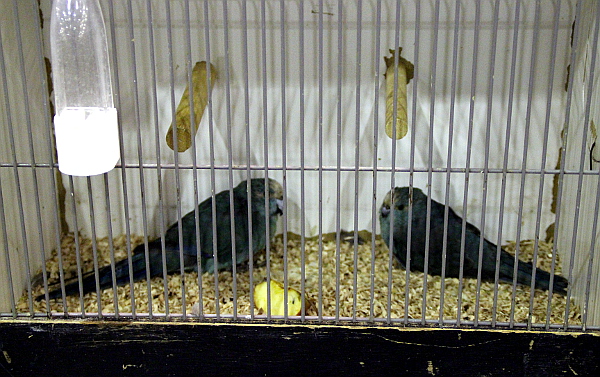
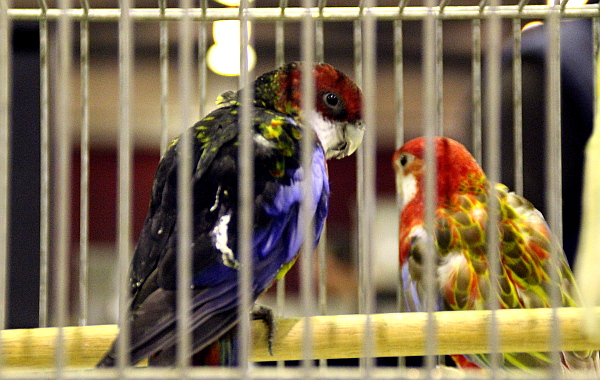
In Zwolle you could find desirable black mutation of Eastern Rosella but this certain individual was not colored well. We have to also mention the blue and olive mutation of Port Lincoln Parrot and Australian Ringneck Parrot, several mutations of Neophema species, Superb Parrots and dilute King Parrots. On the other hand, we find only a few lories and lorikeets as well as conures. Interesting were Golden Conures, Ornate Lorikeets, Goldiei Lorikeets, Yellow-backed Lories, Red Lories, Red-flanked Lorikeets and Scale-breasted Lorikeets. We also saw several subspecies of the Rainbow Lorikeet.
a
(c) Jan Potucek
a
(c) Jan Potucek
a

(c) Jan Potucek
a

(c) Jan Potucek
a

(c) Jan Potucek
a

(c) Jan Potucek
a

(c) Jan Potucek
Photos: (c) Jan Potucek, Ararauna.cz

 Speakers of the X. International Parrot Convention: ...
July 21st, 2022
Speakers of the X. International Parrot Convention: ...
July 21st, 2022
 Speakers of the X. International Parrot Convention: Ant...
June 13th, 2022
Speakers of the X. International Parrot Convention: Ant...
June 13th, 2022
 Speakers of the X. International Parrot Convention: Mar...
May 22nd, 2022
Speakers of the X. International Parrot Convention: Mar...
May 22nd, 2022
 Speakers of the X. International Parrot Convention: Ju...
May 16th, 2022
Speakers of the X. International Parrot Convention: Ju...
May 16th, 2022

 8k
8k 25k
25k

 18k
18k